

.jpeg?w=1001&h=1001)

Olympic archery is a sport of precision, focus, and incredible discipline. But here’s the good news: you don’t need a fancy range or thousands of dollars in equipment to start training like a pro. Whether you’re a young archer dreaming of the podium or an adult looking to improve, mastering Olympic archery at home is entirely possible — and fun.
This guide will walk you through everything you need to know: understanding your equipment, building technique, strengthening your body, sharpening your mind, and creating a training routine that’s effective and safe. By the end, you’ll know how to go from casual practice to medal-ready performance — all from the comfort of your home.
1. Understanding Olympic Archery Equipment
Before you start shooting, it’s essential to know what you’re working with. The right equipment is the foundation of every accurate shot.
Bow Type
- Recurve Bow: The standard for Olympic competitions. Lightweight, with limbs that curve away from you. Emphasizes proper form and technique over mechanical advantage.
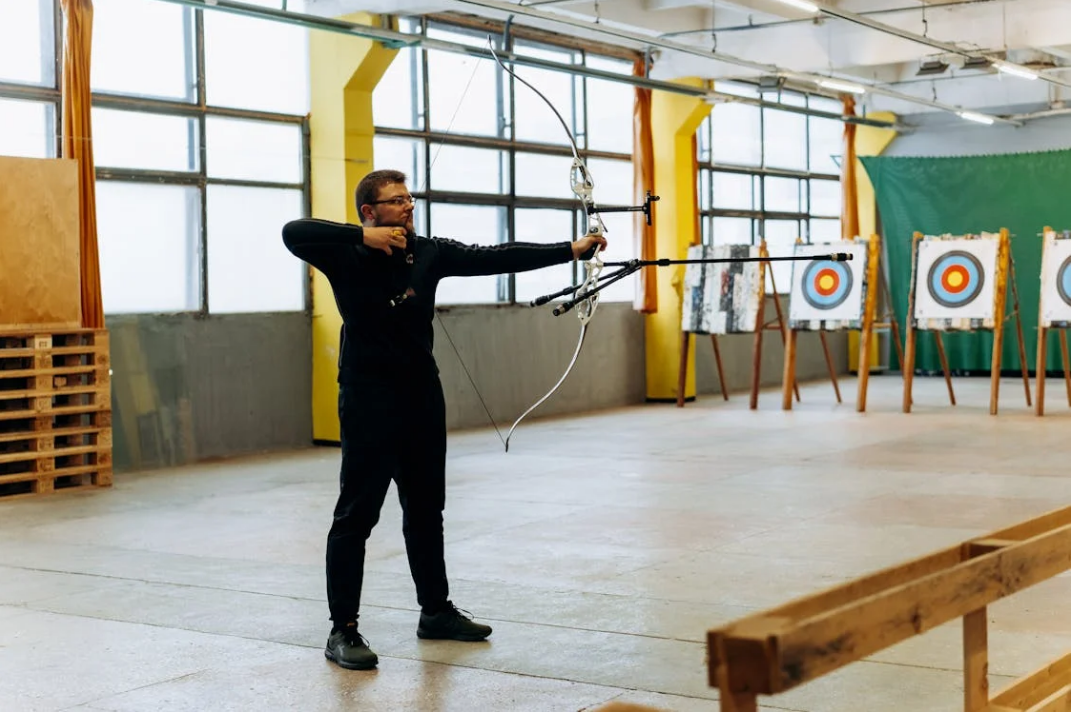
- Stabilizers: Long rods attached to the bow to reduce vibration and improve balance. Essential for consistency at longer distances.
- Sight Pins: Adjustable aiming points that allow you to hit targets at varying distances.
Arrows
- Carbon Arrows: Lightweight, fast, and durable. Perfect for accuracy and consistency.
- Fletching: Feathers or vanes that stabilize flight. Parabolic or shield-shaped vanes are popular among Olympic-style archers.
- Arrow Spine: The stiffness of the arrow. A proper spine prevents wobbling and ensures consistent grouping.
Accessories
- Finger Tab or Glove: Protects your fingers during repeated draws.
- Arm Guard: Shields your forearm from string slap and allows smoother follow-through.
- Quiver: Keeps arrows organized and accessible.
Olympic Archery Equipment Guide
Knowing your gear inside and out helps prevent frustration and keeps training productive. Even a small mistake in arrow spine or bow tuning can throw off your practice — and we don’t want that.
2. Setting Up Your Home Practice Space
You don’t need a massive backyard or professional range to practice like a champion. You just need a safe, dedicated space.
Choosing Your Spot
- Indoors: Perfect for consistency and avoiding wind interference. Make sure you have a solid backdrop — a sturdy target or foam block to stop arrows.
- Outdoors: Provides real-world conditions for distance practice. Clear space is crucial to ensure safety.
Safety First
- Always check your surroundings before shooting.
- Ensure a clear line of sight with no pets, people, or breakable objects nearby.
- Use appropriate protective gear: arm guards, finger tabs, and a proper backstop.
Target Setup
- Standard Olympic distances range from 18m indoors to 70m outdoors. For home practice, start closer and gradually increase distance as skill improves.
- Make sure targets are secure and at an appropriate height.
Even small adjustments to your space — like improving lighting or marking shooting lanes — can make a massive difference in comfort and accuracy.
3. Building Technique at Home
Olympic archery is all about consistent, repeatable technique. A strong foundation ensures that every arrow flies true.
Stance and Posture
- Stand shoulder-width apart, weight evenly distributed.
- Keep your back straight and shoulders relaxed.
- Consistent stance is the secret behind grouping arrows tightly on the target.
Draw and Anchor
- Smoothly pull the string back to your anchor point (usually the corner of your mouth or jawline).
- Anchor consistently on every shot. Even tiny variations can affect accuracy dramatically.
Aim and Release
- Use your sight pin as a reference.
- Keep your bow arm steady, draw arm controlled.
- Release the string cleanly without jerking. Practice dry-firing (without arrows) to reinforce muscle memory safely.
Follow-Through
- Maintain posture after the arrow leaves.
- Don’t drop your bow or lower your arm immediately — this keeps the arrow flying true.
Olympic Archery Technique Tips
Practice is meaningless without attention to detail. A minute adjustment to your grip or anchor can change scores significantly.
4. Physical Conditioning for Archery
Even though archery may look stationary, it requires surprisingly strong and stable muscles.
Upper Body Strength
- Focus on shoulders, back, and arms. Exercises like push-ups, rows, and resistance bands improve draw strength.
Core Stability
- A strong core stabilizes the torso, allowing for better balance and control. Planks, yoga, and rotational exercises work wonders.
Endurance
- Competitions last for hours. Shoot multiple arrows per session and gradually increase your sets to build stamina.
Flexibility
- Stretch shoulders, back, and arms before practice. Flexibility reduces fatigue and prevents injuries.
Building physical strength and endurance ensures that technique doesn’t deteriorate under fatigue.

5. Mental Training: Sharpen Your Focus
Archery is a mental game as much as a physical one. Developing mental resilience is crucial, especially under pressure.
Visualization
- Picture each shot in your mind. Imagine the arrow flying perfectly to the bullseye.
Routine and Breathing
- Create a pre-shot routine. Focused breathing helps calm nerves and improves concentration.
Simulate Competition Pressure
- Time yourself, create score challenges, or practice with distractions. The more realistic the training, the better prepared you’ll be for real competition.
Mental Training for Young Archers
Even elite athletes spend hours training their mind — not just their arms.
A clear sight and scoring target help track improvement over time — check out our precision training kits
6. Common Mistakes and How to Avoid Them
Skipping Warm-Ups
- Leads to muscle strain and reduced accuracy.
Over-Focusing on Equipment
- A top-tier bow cannot compensate for poor technique.
Neglecting Mental Prep
- Stress and nerves can ruin an otherwise perfect draw.
Ignoring Form Consistency
- Inconsistent stance, anchor, or follow-through leads to unpredictable results.
Avoiding these mistakes early sets you up for long-term success.

7. Structuring a Home Training Routine
A balanced home training plan targets technique, strength, and mental focus:
Daily Routine (45–60 min)
- 10 min warm-up and stretching
- 20–30 min technique practice (anchor, aim, release)
- 10–15 min physical exercises (core, shoulders, back)
- 5 min visualization or mental prep
Weekly Focus
- Alternate between short-distance accuracy, long-distance endurance, and competition simulation.
- Review scores and identify weak points for improvement.
Consistency is the key to mastery. Even 45 minutes a day beats sporadic 2-hour sessions.
8. Safety Considerations
Practicing at home still requires strict safety:
- Check equipment before each session.
- Ensure a clear line of fire and a secure target/backstop.
- Wear protective gear every time.
- Never shoot at people, pets, or fragile objects.
Safety protects you and ensures that your training is productive, injury-free, and enjoyable.
9. Conclusion
Mastering Olympic archery at home is achievable with the right combination of technique, physical conditioning, mental focus, and equipment knowledge. Young archers who commit to consistent practice, attention to detail, and safe training habits will see dramatic improvements in accuracy and confidence.
From setting up a safe home range to fine-tuning your anchor point and training your mind, every step matters. Remember: Olympic archery isn’t just about raw talent — it’s about preparation, patience, and perseverance.
Ready to bring your home training to the next level?
From bows to arrows to full training setups, explore our complete Olympic archery gear and get everything you need to start your journey from home range to medal podium.